
By R. Luke Sturgill, MD · Double Board-Certified Facial Plastic Surgeon · Carmel, Indiana
You don't want to look "surprised." You want to look like you—just awake.
Most patients who ask about their "heavy upper lids" aren't asking for a different face. They want their eyes to look open again—without that over-pulled, startled, or "done" appearance.
That's exactly how Dr. Sturgill approaches brow lifting: restore the natural position of the brow so the upper face looks refreshed because the anatomy is back where it belongs—not because skin has been stretched or pulled.
Double board-certified facial plastic surgeon in Carmel, serving Indianapolis and beyond. Dr. Sturgill focuses exclusively on the face and neck, with patients traveling from across the Midwest—and both coasts—for his technique-driven approach and honest assessments.
The Real Cause of "Heavy" Upper Lids
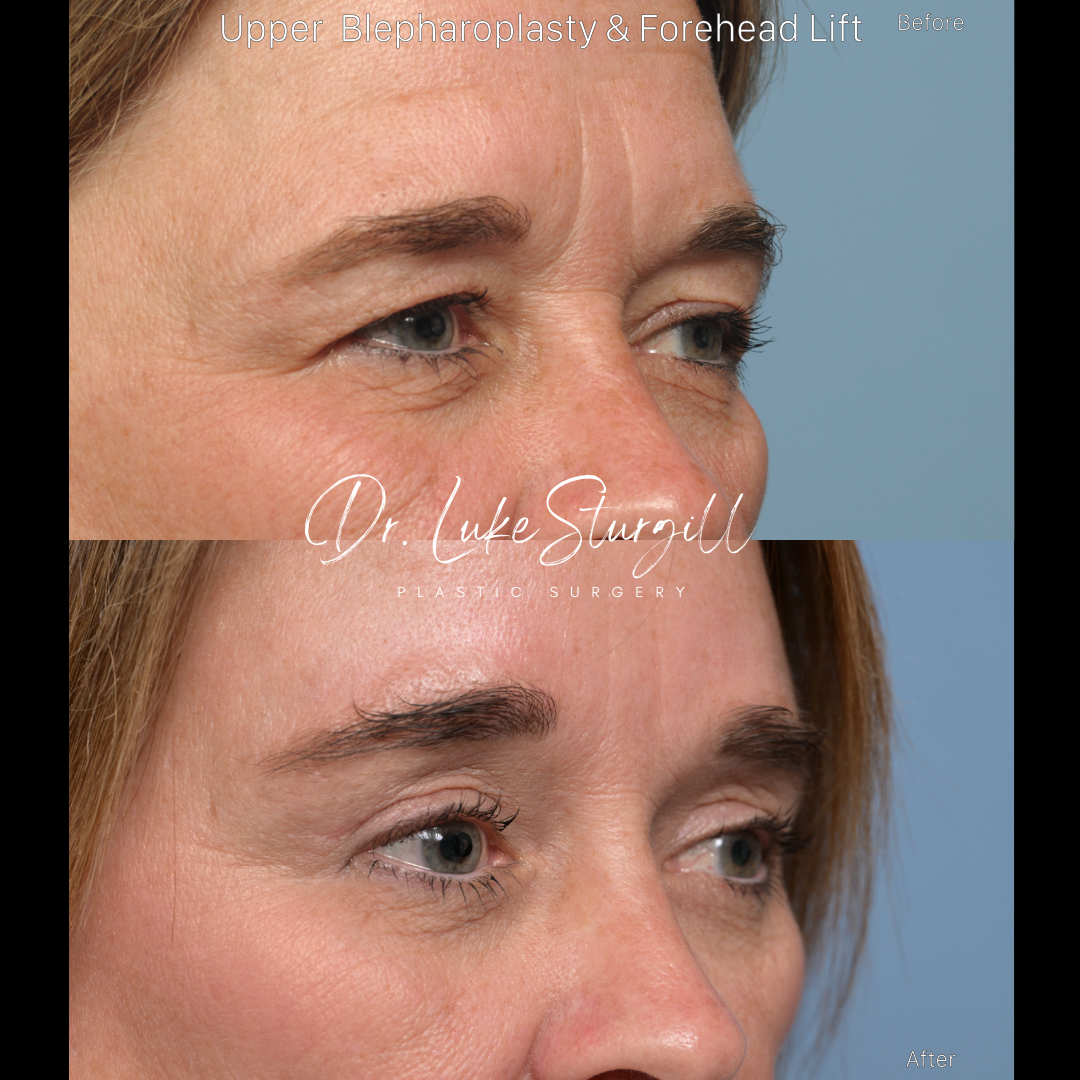 Upper Blepharoplasty & Forehead Lift
Brow repositioned, lid skin conservatively addressed — not the other way around.
Here's the problem: many patients—and many surgeons—blame the eyelids when the brow is the real issue.
When the brow descends with age, it pushes tissue onto the upper lid, creating hooding and heaviness. The instinct is to remove that "extra" eyelid skin. But if the brow is the culprit, removing lid skin is treating the symptom instead of the source—and the result can look hollowed, unnatural, or simply "off."
The common mistake: Once skin is removed from the eyelid, it's gone permanently. If the real problem was a low brow, you've now lost tissue you needed—and the result can't be undone.
Think of it like this: your brow is a curtain rod; your eyelid skin is the curtain. If the rod sinks, the curtain bunches. You can trim the curtain—but if the rod stays low, the problem isn't fixed. And once that skin is gone, it's gone.
The Opposite Approach
Dr. Sturgill restores the rod. By lifting the brow endoscopically, the eyelid skin smooths out on its own. The eyes open up, the hooding disappears, and you retain the natural volume of your upper lid—without the hollowed look that comes from over-resecting eyelid skin.
Try This at Home
Stand in front of a mirror and gently lift your brow with your fingertips. If your upper lids look dramatically better—more open, less hooded—the brow is likely the primary problem. If there's still excess skin resting on the lid even with the brow lifted, you may need both a brow lift and upper blepharoplasty.
Dr. Sturgill performs a brow lift in approximately two-thirds of his facelift cases because addressing the brow is often essential to a balanced, natural-looking rejuvenation.
What Dr. Sturgill Is Actually Evaluating
Brow lift surgery isn't about "raising the brow." It's about restoring balance to the upper face. In your consultation, Dr. Sturgill evaluates the entire periorbital and forehead complex—not just the brow in isolation:
Brow position — medial vs. lateral descent (they're different problems requiring different solutions)
Brow shape — the natural arch and how it frames your eye
Forehead muscle activity — how much you're unconsciously raising brows to compensate
Upper eyelid contribution — how much "hooding" is true skin excess vs. brow descent
Hairline position and density — critical for incision placement and concealment
Asymmetry — one brow often sits lower than the other
Overall facial harmony — how the brow relates to eyes, midface, and neck
That analysis determines the plan. No cookie-cutter brow lifts. No forcing a technique. Just the right move for your anatomy.
Endoscopic Forehead & Brow Lift Before & After
A heavy brow doesn't just make you look older — it makes you look tired, angry, or sad, even when you feel none of those things. What you'll notice across these patients isn't a "surprised" or pulled look. It's the opposite: a naturally elevated, rested version of themselves. That's the standard. You want to look like you — just refined. An endoscopic brow lift repositions the brow to its anatomically correct position through small, hidden incisions — restoring the open, refreshed appearance of the upper face without the telltale signs of surgery. Pay attention to how the lateral brow is lifted without flattening the arch, and how the forehead looks smoother without looking frozen.
What to Look For
Here's what separates a technically excellent result from an average one:
A note on photos: All images are unretouched and show real patients of Dr. Sturgill photographed under consistent clinical lighting. Results vary by individual anatomy, skin quality, and healing response. These photos represent typical outcomes — not best-case-only marketing.
The Endoscopic Advantage
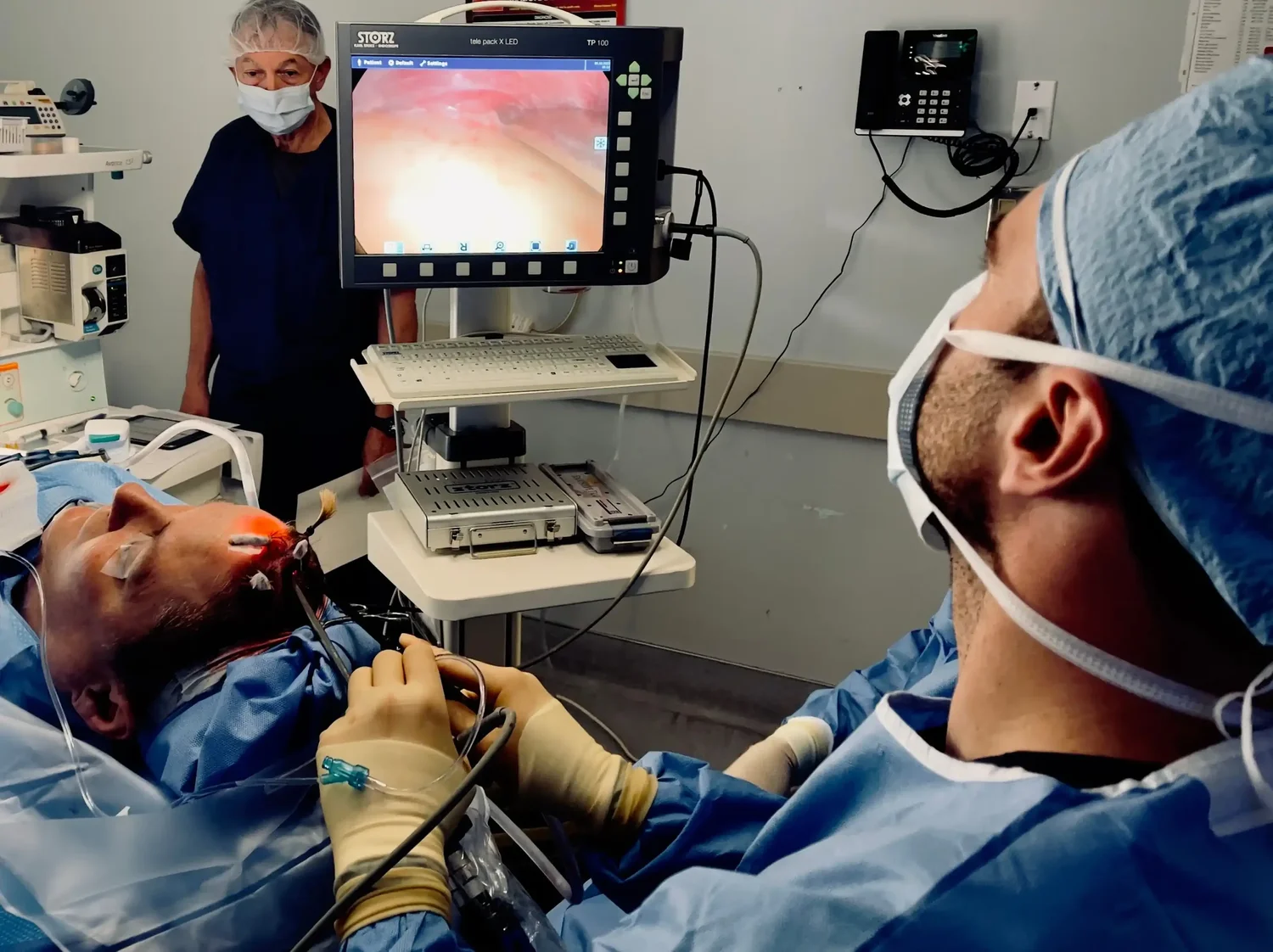
Here's the problem: Traditional brow lifts required a long incision from ear to ear across the top of the scalp. That meant significant scarring, prolonged numbness, risk of hair loss, and a longer recovery. Dr. Sturgill uses the endoscopic technique—which has replaced the traditional approach for most patients.
How It Works
Through 2–4 small incisions—each less than an inch—hidden within the hair-bearing scalp, Dr. Sturgill uses a tiny camera and specialized instruments to release the tissues anchoring the brow in its descended position. Once released, the brow is elevated and secured where it belongs.
The brow is tethered to bone by fibrous attachments. Over time, gravity wins—the brow descends while staying anchored. Simply "pulling up" creates tension and an unnatural look. Releasing those attachments allows the brow to be repositioned without fighting against its own anatomy. That's how you get a lift that looks natural and lasts.
How Dr. Sturgill Does It Differently
Hidden Incisions
Small ports placed in hair-bearing scalp—essentially invisible once healed.
No Large Hairline Scar
No ear-to-ear incision. No hairline distortion.
Faster Recovery
Most patients are socially presentable within 10–14 days.
Natural Results
The brow is repositioned—not "pulled." You look like you, just refreshed.
Brow Lift vs. Upper Blepharoplasty: Getting the Diagnosis Right
This is one of the most common points of confusion in facial rejuvenation—and getting it wrong leads to unnatural results.
Removes excess eyelid skin
Think of it as trimming the curtain.
Addresses true skin redundancy on the upper lid—the tissue that folds over the crease and can impair peripheral vision or create a heavy, tired appearance.
Repositions a descended brow
Think of it as raising the curtain rod.
Elevates the brow back to its youthful position, reducing the weight pushing down on the upper eyelid and restoring the natural architecture of the upper face.
The common mistake: If the brow has descended, removing extra eyelid skin to compensate can create a tight, hollow upper lid that looks operated on—because you're forcing the eyelid to do the brow's job.
Many patients need both—and that's fine. The key is identifying what's driving the problem so the right amount of each procedure is performed. Lifting the brow first (or simultaneously) often reduces how much lid skin needs removal, preserving natural fullness and avoiding the over-resected look.
Dr. Sturgill's Approach
Dr. Sturgill evaluates both structures together and frequently performs brow lift and upper blepharoplasty in the same surgery when indicated. The combination—done correctly—produces a result that looks naturally refreshed, not surgically altered.
Learn more about eyelid surgeryComplementary Procedures
Descent
Sagging brow and lids—gravity pulling tissues below their youthful position.
Brow lift addresses thisDeflation
Hollow temples and upper lids—volume loss that creates a gaunt, skeletal look.
Fat grafting addresses thisDamage
Skin texture changes, wrinkles, and sun damage that accumulate over decades.
Resurfacing addresses thisA brow lift addresses descent. But the upper face ages in all three ways simultaneously. Dr. Sturgill frequently combines the brow lift with complementary procedures to achieve balanced, natural-looking results—because correcting one without the others can create an imbalance.
Upper Blepharoplasty
When the brow is restored to its proper position, true eyelid skin excess becomes clearer. Many patients benefit from combining a brow lift with upper blepharoplasty to remove the remaining redundant lid skin and create a clean, open upper lid.
The key is sequence and proportion: lift the brow first (or simultaneously), then conservatively address only the true lid excess. This avoids the hollow, over-resected look that comes from removing lid skin to compensate for a low brow.
Learn more about eyelid surgeryExtended Deep Plane Face & Neck Lift
A brow lift rejuvenates the upper face, but it doesn't address the midface, jawline, or neck. If you have jowling, a heavy neck, or midface descent, a brow lift alone will create an imbalance—a refreshed upper face sitting above an aged lower face.
Dr. Sturgill performs an endoscopic brow lift in approximately two-thirds of his facelift cases because comprehensive rejuvenation often requires addressing the entire face as a unit. The combination produces a result that looks naturally younger throughout, not "done" in one area.
Learn more about the deep plane face & neck liftFacial Fat Grafting
Volume loss in the temples and upper periorbital region can make the brow area look hollow or skeletal—a problem lifting alone won't fix. Fat grafting restores this lost fullness with your own tissue, creating a smoother, healthier contour.
When combined with a brow lift, fat grafting softens the transition from forehead to temple and prevents the "skeletonized" look that can occur when descent is corrected without addressing deflation.
Learn more about facial fat graftingSkin Resurfacing
A brow lift repositions tissue but does nothing for skin quality. Fine lines, sun damage, and textural irregularities remain—and can become more noticeable once the structural issues are corrected.
Surgery handles the structure; resurfacing handles the surface. Laser resurfacing or chemical peels can address forehead lines, crow's feet, and overall skin quality. The combination produces smoother, tighter, better-quality skin.
Learn more about skin resurfacingWhy Patients Choose
Dr. Sturgill
Patients travel from across the country for care that prioritizes honesty, artistry, and results that look like you.
Specialization
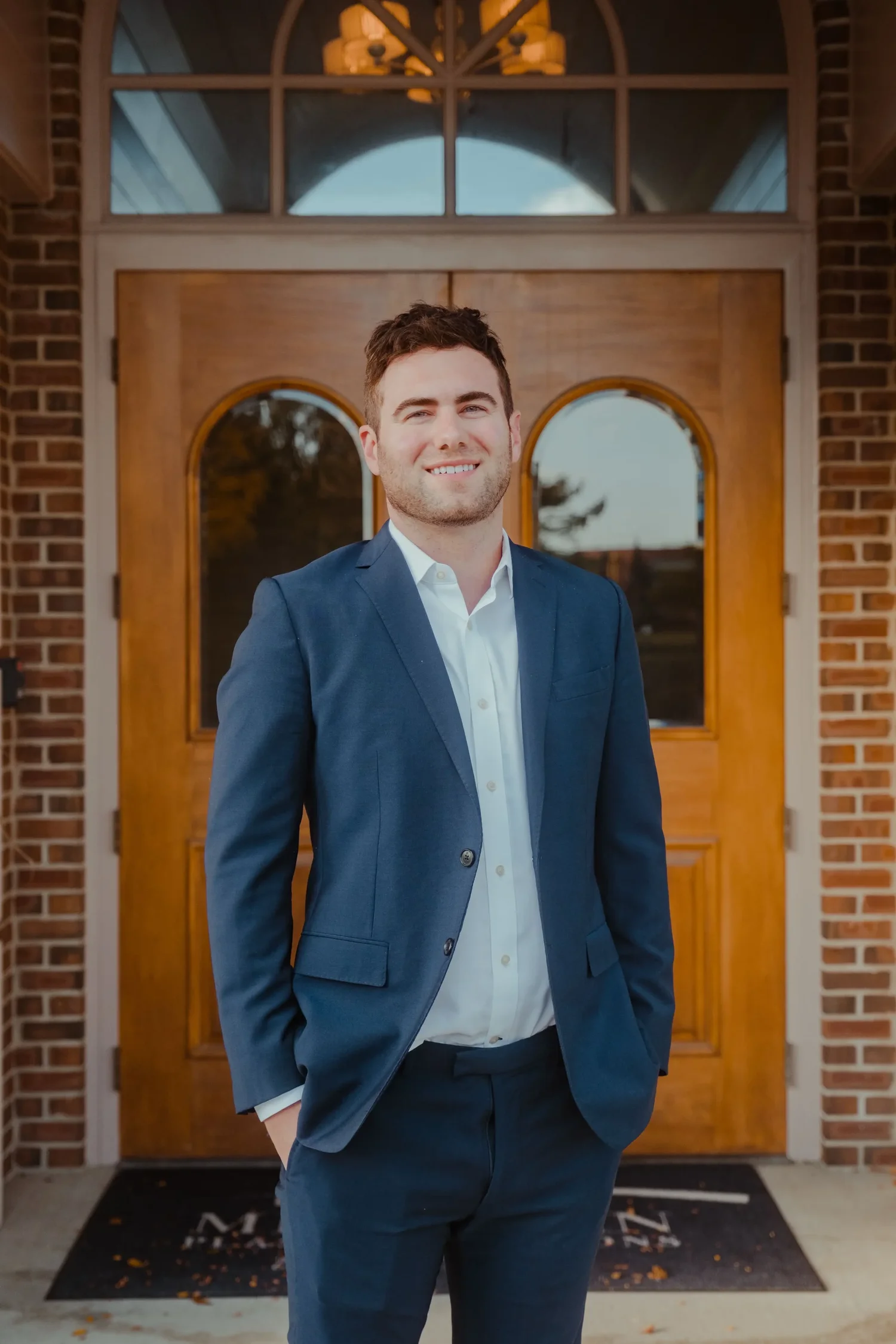
Double board-certified in facial plastic surgery. He focuses exclusively on the face and neck — performing endoscopic forehead and brow lifts at a volume that ensures consistency and mastery.
Truth & Transparency
No sales pressure. No "magic" wands. Just honest assessments of what anatomy and surgery can achieve — so you can make decisions with clarity, not confusion.
The "Unoperated" Look
His aesthetic goal is for you to look like yourself — just rested, refined, and restored. Never overdone, never obvious.
What Patients Are Saying About Dr. Sturgill
Real reviews from real patients—because the best referral is an honest one.
Ready to take the next step?
Your consultation is a planning session — not a sales pitch.
Dr. Sturgill will evaluate your facial anatomy, discuss your goals, and give you an honest assessment of what surgery can — and cannot — achieve. You will leave with a clear understanding of whether this procedure is right for you.
What to expect
- Review your concerns and goals in detail
- Receive a facial analysis with a personalized surgical plan
- See before-and-after photos of what YOU will look like after surgery
- Have all your questions answered directly
Consultations typically last around 45 minutes.
Book Your Consultation
Your Questions, Answered
A brow lift repositions a descended brow — the structure that frames the upper eye. Upper blepharoplasty removes excess skin from the eyelid itself. They address different problems that can look remarkably similar in the mirror.
The "mirror test" helps clarify: if you place your fingers above your brow and lift, and the upper lid hooding dramatically improves — the brow is likely the primary issue. If hooding persists even with the brow elevated, you have true eyelid skin excess. Many patients benefit from both procedures performed together — and getting the diagnosis right is the difference between a refreshed result and an over-resected, hollow-looking lid.
Dr. Sturgill evaluates this during your consultation by analyzing brow position, eyelid skin redundancy, and how the two interact dynamically. The wrong diagnosis leads to one of two problems: over-resection of lid skin (creating a hollow, pulled appearance) or an incomplete result where hooding remains despite surgery.
This is one of the most commonly misdiagnosed problems in facial plastic surgery. A descended brow that gets treated with blepharoplasty alone can look worse — because the real issue was never addressed. Getting it right the first time is what separates a natural, refreshed result from looking "done."
The endoscopic technique typically uses just 2 small incisions hidden within the hair-bearing scalp — though up to 4 may be placed if the medial brow needs elevation as well — instead of a single long incision across the top of the head. Dr. Sturgill uses a camera and specialized instruments to release the brow from its attachments and reposition it at the appropriate height.
Benefits include minimal scarring, no hairline distortion, faster recovery, and more precise control over brow positioning. For the majority of patients, this approach has entirely replaced the traditional coronal (ear-to-ear) incision — delivering better results with far less downside.
Not sure if you need a brow lift, eyelid surgery, or both?
The answer is in your anatomy — not a checklist. Dr. Sturgill will evaluate your specific situation and tell you exactly what will make the biggest difference.
The incisions are small and placed entirely within the hair-bearing scalp — once healed, they're essentially invisible. Hair loss is typically minimal with the endoscopic technique because the incisions are made carefully and the dissection preserves hair follicles.
Some patients notice temporary numbness or tingling behind the incision sites, which typically resolves within a few months. This is a normal part of the healing process, not a complication.
Not when it's done correctly. The "surprised" look comes from over-elevation or lifting the brow in the wrong vector — often a medial brow that's been pulled too high rather than repositioned in its natural arc. It's a technical failure, not an inherent risk of the procedure.
The goal is restoration, not exaggeration: brighter eyes and a calmer, more rested upper face without changing your identity. The best brow lift result doesn't announce itself as a brow lift — people should notice that you look refreshed, not that you had surgery.
A brow lift produces long-lasting results — typically 10–15 years or more — because it addresses the structural cause of descent rather than masking symptoms. The brow won't return to its pre-surgical position, though aging continues at its natural pace.
Patients who have a brow lift in their 40s or 50s often maintain a refreshed, open appearance well into their 60s and beyond. When compared to Botox (which must be repeated every 3–4 months indefinitely), a brow lift is a one-time correction with a dramatically longer return.
Most patients take 7–10 days off work. Swelling and bruising are typically mild and concentrated around the forehead and upper eyelids — and gravity can pull some of that swelling down around the eyes, which is normal and temporary.
You'll have a light compression dressing for the first day or two. Most patients feel comfortable being seen socially within 10–14 days. Strenuous activity should be avoided for 2–3 weeks to minimize swelling and protect the fixation while the tissues heal in their new position.
Most patients describe the sensation as tightness or pressure rather than pain. Discomfort is usually well-controlled with prescribed medication for the first few days, and many patients transition to over-the-counter Tylenol quickly. Significant pain is uncommon — and if it occurs, it's worth reporting, as pain out of proportion to expectations can occasionally signal something that needs attention.
This is one of the most important questions patients with heavy brows need to understand. Botox works by relaxing muscles — and in the forehead, the frontalis muscle is the only thing holding your brows up. If your brows are already sitting low or heavy, injecting Botox into the forehead takes away the one muscle compensating for that descent. The result? Your brows drop even further, your eyes feel heavier, and you're left looking tired or hooded — the opposite of what you wanted.
This is the frustrating cycle many patients find themselves in: they want their forehead lines smoothed, but every time they get Botox, their brows fall. They're told to "just use less" or "stay higher on the forehead," but the reality is that no amount of careful dosing solves a structural problem. The frontalis is fighting gravity on your behalf — and Botox disarms it.
A brow lift breaks that cycle. By physically repositioning the brow to where it belongs, surgery removes the burden from the frontalis muscle. Once the brow is supported structurally, patients can finally get Botox in their forehead without the drop — because the muscle no longer needs to work overtime to hold everything up.
So it's not that Botox is bad — it's that Botox alone can't fix true brow descent. For patients caught in that cycle, a brow lift isn't just cosmetic. It's what finally lets the rest of their treatment plan work the way it should.
Still Have Questions?
Your consultation is a planning session — not a sales pitch. Dr. Sturgill will evaluate your anatomy and give you an honest assessment of what will make the biggest difference.