
By R. Luke Sturgill, MD · Double Board-Certified Facial Plastic Surgeon · Carmel, Indiana
Neck & Jawline Sculpting
You’re Not Looking for a “Procedure.” You’re Looking for a Jawline That Makes Sense.
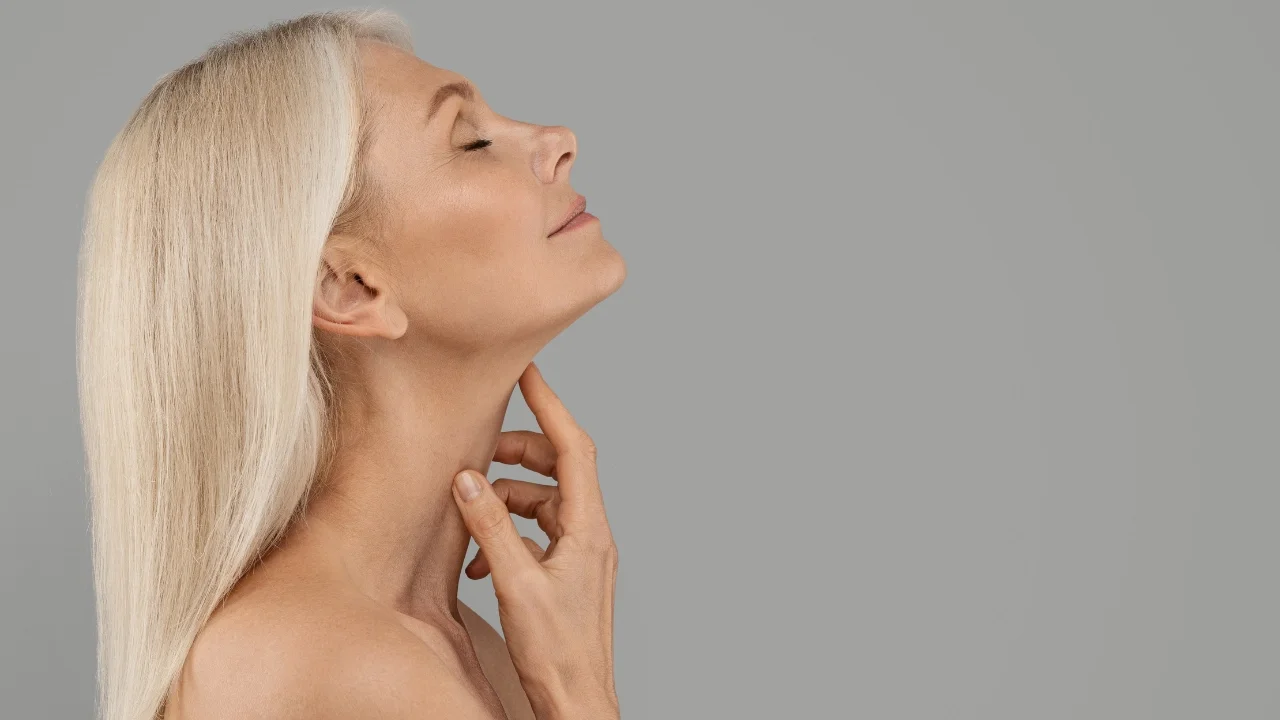
You don’t want to look “different.” You want to look like you — just more defined, more structured, and less distracted by what’s happening under the chin.
Most people who ask about their neck or jawline share the same fear: looking “done.” Looking tight. Looking like someone who had surgery.
Here’s the goal: restore the clean lines — the sharp cervicomental angle, the defined jawline, the smooth neck — without anyone being able to point to why you look better. That’s the entire point.
Dr. Sturgill is a double board-certified facial plastic surgeon practicing in Carmel, Indiana — just north of Indianapolis — whose practice focuses exclusively on the face and neck. Not body contouring. Not breast surgery. Every case, every day, from the collarbones up.
Patients travel from across Indiana, the Midwest, and nationally — not for a gimmick, but for something increasingly rare: an honest assessment of what’s actually going on and a surgical plan built around it.
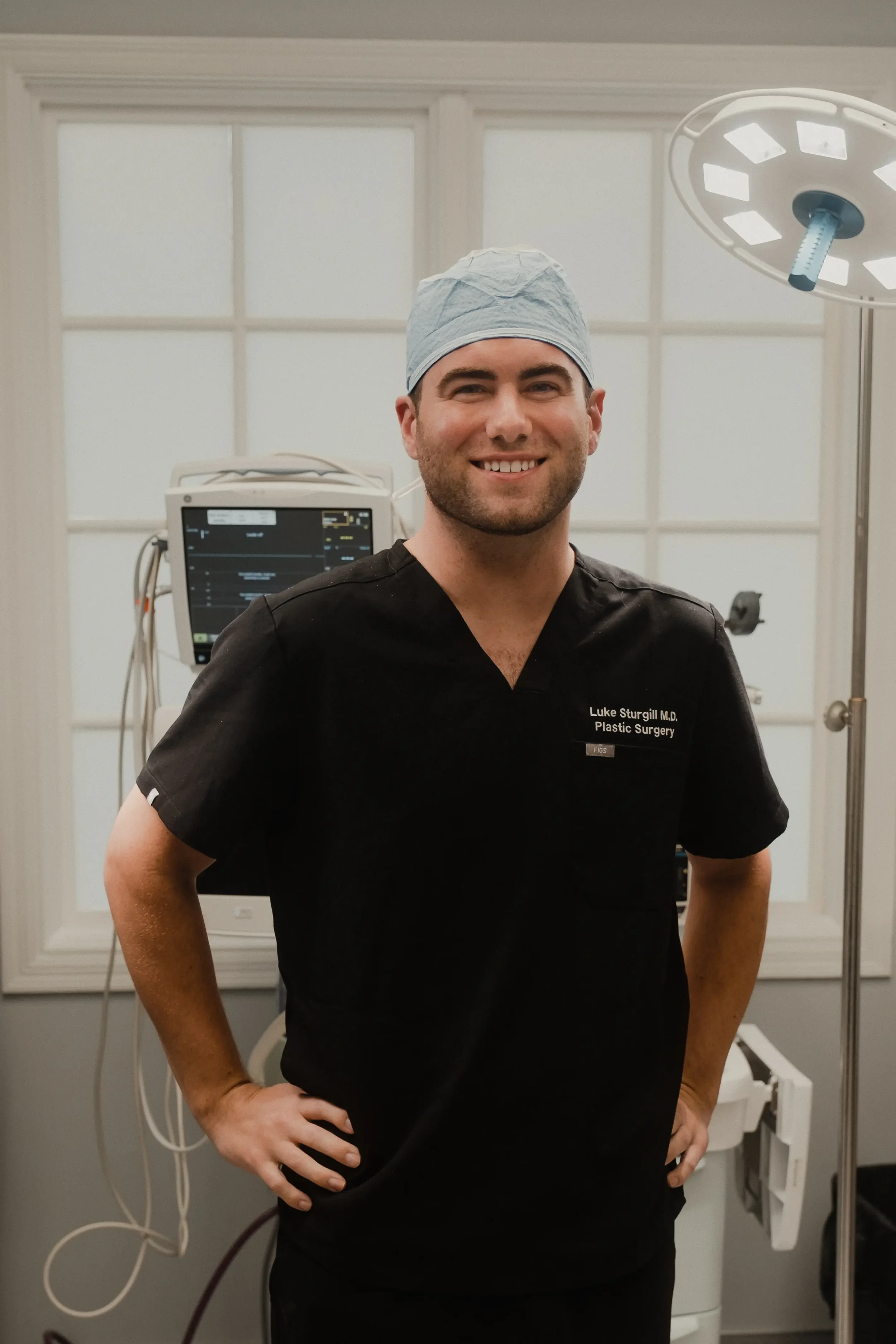
R. Luke Sturgill, MD ◆ Facial Plastic Surgeon
The Problem
Every Neck Gets the Same Treatment. Every Neck Is Different.
“Neck lift” gets treated like a single procedure. Patient walks in, points under the chin, says “I want this gone.” Too many surgeons say “sure” — and reach for the same tool regardless of what’s actually causing the problem.
They don’t evaluate the skin. They don’t assess the platysma. They don’t ask whether a recessed chin is making the neck look worse than it is. And they don’t have an honest conversation about whether liposuction alone will actually produce the result the patient is picturing.
What That Looks Like Six Months Later
01
The patient who got liposuction when their skin couldn’t redrape — now they have a deflated, empty neck instead of a full one. That’s not a better problem.
02
The patient who got a “neck lift” when jowls were present — smooth below the jawline, lumpy along it. The mismatch is obvious.
03
The patient who got over-aggressive tightening without structural support — they don’t look younger. They look operated.
The single biggest cause of disappointing neck and jawline results isn’t a technical error. It’s choosing the wrong procedure for the anatomy.
Dr. Sturgill starts with anatomy — skin, fat, muscle, skeletal structure — and works backward from the result to determine which procedure will actually get you there. Not which one is fastest. Not which one sounds least invasive. The one that matches your structure.
Your anatomy dictates the approach. Not your age. Not a trend. Your structure.
The Diagnostic Process
What Dr. Sturgill Is Actually Evaluating
Outcomes are decided before anyone picks up a scalpel. The diagnostic process matters as much as the surgery — because the most common mistake isn’t “bad hands.” It’s the wrong procedure for the anatomy.
01
Skin Quality & Elasticity
Can the skin redrape on its own after fat removal, or does it need surgical repositioning? This single factor often determines whether liposuction is sufficient or a lift is required.
02
Submental Fat Distribution
Not all fat is the same. Superficial fat sits above the platysma; deep fat sits below it. They’re addressed differently. A surgeon who only treats one layer leaves the other untreated.
03
Platysmal Muscle Tone & Banding
The platysma creates those vertical “bands.” Some patients have significant banding in their 30s. Others have minimal banding in their 60s. Banding isn’t just “loose skin” — it’s muscle separation.
04
Degree of Jowling
This is the fork in the road. Jowling indicates the need for a face + neck solution, not a neck-only procedure. If jowling is present and the neck is treated alone, the mismatch is visible.
05
Chin Projection & Skeletal Framework
A recessed chin can masquerade as a “fat neck.” If the skeleton isn’t evaluated, the wrong procedure gets recommended. Structure creates definition — without it, the jawline can’t look sharp.
06
Cervicomental Angle
The angle between chin and neck that defines the profile. Improving it can mean fat removal, muscle tightening, skin redraping, structural augmentation — or a combination.
07
Patient Age as Context
Genetics, weight changes, and skeletal anatomy can make a 28-year-old a better candidate for neck tightening than a 50-year-old. Age guides the conversation — it doesn’t dictate the plan.
08
Overall Facial Harmony
The neck doesn’t exist in isolation. A sculpted jawline that doesn’t match the midface reads as operated. Aging doesn’t happen in compartments, and surgical correction shouldn’t either.
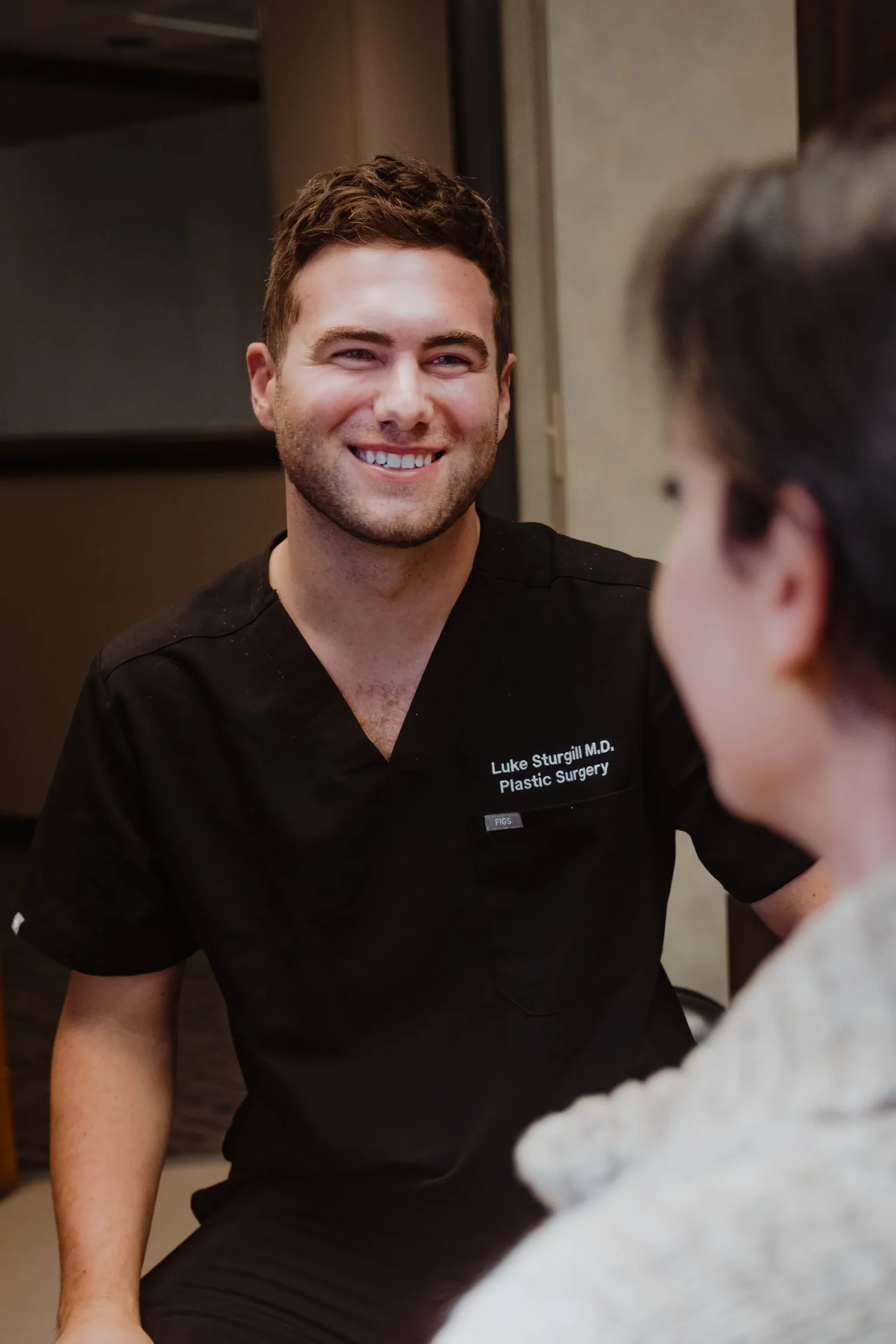
Anatomical evaluation ◆ Carmel, Indiana
The Surgical Range
From Targeted Liposuction to Deep Plane Lifting
This is the framework Dr. Sturgill uses to evaluate every neck and jawline patient. It’s not a menu you choose from — it’s a diagnostic map. Your anatomy tells him what’s required.
Submental
Liposuction
Isolated
Neck Lift
Full
Neck Lift
Deep Plane
Face & Neck
Least Involved
Most Comprehensive
LEVEL 1
Submental Liposuction Only
Best for: Younger patients (often early 20s) with isolated submental fullness and excellent skin elasticity.
Removes excess fat beneath the chin through a small, hidden incision. This is the least invasive surgical option — and when it’s right, the results are striking. But the key requirement is elasticity.
What It Does
Removes the fat blunting the jawline and filling in the neck angle. Precise contouring, not aggressive hollowing.
What It Does Not Do
Tighten loose skin. Correct platysmal banding. Address jowling. The skin must redrape on its own.
After fat removal, the skin must redrape on its own. If it can’t — and this is where honest patient selection matters — you don’t get “definition.” You get emptiness. Loose skin where fullness used to be. That’s not a better problem.
LEVEL 2
Isolated Neck Lift (Submental Approach)
Best for: Patients (often late 20s–30s) with submental fullness plus early skin laxity or platysmal banding — without significant jowling.
Through a single incision hidden beneath the chin, Dr. Sturgill removes fat, tightens the platysma muscle, and sharpens the cervicomental angle. No incisions behind the ears. This is a true “neck-only” procedure for the right anatomy.
What It Does
Addresses fat (superficial and deep), tightens the platysma muscle, and improves the neck angle — all through one hidden incision.
What It Does Not Do
Address jowling or midface descent. If jowls are part of the picture, this approach alone won’t produce a clean jawline.
Some patients don’t need a full neck lift — and they definitely don’t need a facelift. But they need more than liposuction. If you see vertical bands or feel looseness under the chin, but your jawline is still intact, this may be exactly what your anatomy calls for.
LEVEL 3
Full Neck Lift (Submental + Postauricular)
Best for: Patients (often late 30s–40s+) with more advanced neck laxity, skin excess, and platysmal banding — still without significant jowling.
Adds discreet incisions behind the ears to the submental approach — allowing skin to be redraped and excess removed while performing the same deep neck contouring. These incisions hide in the natural crease and are virtually undetectable once healed.
What It Does
Everything the isolated neck lift does, plus skin removal and redraping for patients with more significant laxity.
What It Does Not Do
Correct jowling or midface descent. If jowls are present, the jawline will still look undefined — even with a beautifully smooth neck.
This addresses the neck comprehensively — but intentionally stops short of the face. If your jawline is clean and your concern is isolated to the neck, this is the right procedure. If jowling is present, treating the neck alone creates a mismatch that’s visible and avoidable.
LEVEL 4
Deep Plane Face & Neck Lift
Best for: Patients with jowling, midface descent, and neck concerns — typically 40 or over, but anatomy decides.
Treats the face and neck as a single, integrated unit — which is how aging actually works. When a facelift is performed, a neck lift is almost always included. These aren’t two separate procedures you mix and match. They’re one continuous operation.
What It Does
Releases retaining ligaments, repositions descended tissues, and restores the jawline and neck together. Deep structural repositioning — not skin pulling.
What It Does Not Replace
If your aging is limited to the neck alone with no jowling, this is more than you need. The approach means using only what’s required.
If jowling is present, liposuction or a neck-only lift will not produce a clean jawline. Jowls must be addressed at their source — the descended facial tissue below the jawline. No amount of neck tightening corrects a problem that originates in the face.
Learn More About the Deep Plane Face & Neck Lift →Jawline Enhancement
The Structural Framework
Even a perfectly executed neck lift can look incomplete if the underlying skeletal framework isn’t addressed. A sharp jawline isn’t just about removing fat — it’s about structure.
Chin Implant
Mentoplasty
A weak or recessed chin is one of the most under-diagnosed contributors to a poorly defined neck. The cervicomental angle — the angle that creates a clean, defined profile — is determined in part by how far forward the chin projects.
If the chin sits too far back, even a neck with no excess fat and tight skin will look soft.
Think of it like trying to make a tent look taut without a center pole — the fabric can’t drape sharply because the frame isn’t there.
A chin implant provides permanent structural projection. When paired with neck sculpting, the combined effect is often greater than either procedure alone. This isn’t about making the chin “big” — it’s about creating the foundation for a naturally defined profile.
Learn More About Facial Implants →Fat Grafting to the Jawline
Volume Restoration
Volume loss along the jawline is a hallmark of aging. As fat pads deflate and bone resorbs, the jawline loses its crisp border — and the transition between face and neck blurs.
Fat grafting — using your own harvested fat — restores volume along the jawline and chin, rebuilds contour, sharpens definition, and smooths the transition between face and neck.
This is particularly valuable in patients where the jawline hasn’t descended so much as it has “deflated.” Restoring that volume creates a healthier, more youthful contour without over-tightening.
Learn More About Fat Grafting →Neck & Jawline Sculpting Before & After
Dr. Sturgill’s neck and jawline results span the full surgical range — from isolated liposuction in younger patients to comprehensive face and neck lifts in patients with more advanced aging. What you’ll notice across these results isn’t just a tighter neck. It’s a naturally defined jawline that looks like it was always there. Every result reflects a plan built around that patient’s specific anatomy. No two cases are treated the same way.
What to Look For
Here’s what separates a technically excellent neck and jawline result from an average one:
A note on photos: All images are unretouched and show real patients of Dr. Sturgill photographed under consistent clinical lighting. Results vary by individual anatomy, skin quality, and healing response. These photos represent typical outcomes — not best-case-only marketing.
Recovery
What Recovery Actually Looks Like
Every procedure has its own recovery arc. But the general trajectory is the same — and it’s more manageable than most patients expect.
The Quiet Phase
Compression garment in place. Mild to moderate swelling and bruising, managed with elevation and cold compresses. Most patients describe the discomfort as surprisingly manageable — more tightness and pressure than actual pain. You’ll spend these days resting, but you won’t be bedridden.
Turning the Corner
For procedures beyond liposuction, sutures come out around day 5–7. Bruising begins to shift from purple to yellow — a sign your body is healing. Swelling is present but improving daily. You’ll start to catch early glimpses of your new contour, even through the swelling.
Back in the World
Most patients feel comfortable returning to work and social settings. Any residual swelling is subtle — noticeable to you, but not to the people around you. Light walking and daily activity resume. This is the phase where confidence starts to build.
Building Momentum
Exercise and normal physical activity resume fully. The jawline and neck contour continue to sharpen as deeper tissue healing progresses beneath the surface. Incision lines are fading and becoming increasingly difficult to detect.
The Reveal
Swelling has largely resolved. This is when patients start seeing the result they envisioned — the clean jawline, the smooth neck, the defined cervicomental angle. Photos at this stage often surprise patients with how much has changed.
The Final Result
Tissues have fully settled. Your result is mature — and if the procedure was well-planned and well-executed, it should look like it was always there. No one needs to know. That’s the point.
Recovery varies by procedure
The timeline above reflects the general arc. Your specific recovery depends on what’s being done:
| Procedure | Social Downtime |
|---|---|
| Submental liposuction | 5–7 days |
| Isolated neck lift | 1–2 weeks |
| Deep plane neck lift | 1–3 weeks |
| Deep plane face & neck lift | 2–3 weeks |
Setting Expectations
What Most Patients Get Wrong Before They Walk In
These aren’t criticisms — they’re the most common assumptions Dr. Sturgill hears in consultation. Addressing them honestly is how bad outcomes get prevented.
Misconception 01
“I just need lipo under my chin.”
This is the most common self-diagnosis — and it’s correct maybe 20% of the time. Submental fullness is rarely caused by fat alone. In most patients, it’s a combination of excess fat, a lax platysma muscle, loose skin, and sometimes a recessed chin. Liposuction addresses one of those variables. If the others are present and untreated, you get a deflated, saggy result that can look worse than the original fullness.
Misconception 02
“I want a neck lift, not a facelift.”
This makes perfect sense as a preference. But here’s the clinical reality: if jowling is present — tissue that has descended from the face below the jawline — a neck lift alone cannot correct it. You’ll end up with a smooth neck beneath a jawline that still looks soft and irregular. When jowling is part of the picture, a facelift isn’t an “upgrade” — it’s the correct procedure. And when a facelift is performed, a neck lift is included.
Misconception 03
“I’m too young for a neck lift.”
Neck anatomy is not purely age-dependent. Genetics, weight fluctuations, and skeletal structure all play significant roles. Some patients in their late 20s are excellent candidates for neck work. Some patients in their 50s only need targeted fat removal. Age is a reference point — not a rule. If the anatomy warrants a procedure, the age of the patient is secondary.
Misconception 04
“It’s all the same — just tighten the neck.”
A 25-year-old with submental fat and excellent elasticity needs a completely different approach than a 55-year-old with jowling, platysmal bands, and significant skin excess. Applying the same technique to every patient is how you get results that look “done,” results that don’t last, or results that miss the mark entirely. That’s exactly why a tailored surgical plan — built around each patient’s specific anatomy — matters more than any single technique.
The Bigger Picture
Complementary Procedures
The face and neck age in three ways: descent (sagging), deflation (volume loss), and damage (skin texture). Neck and jawline surgery addresses descent and contour — but often represents one piece of a more complete plan.
Understanding the Surgical Options
| Isolated Neck Lift | Deep Plane Neck Lift | Extended Deep Plane Face & Neck Lift | |
|---|---|---|---|
| Best For | Younger patients with isolated submental fullness, good skin elasticity, and no jowling | Patients with platysmal banding, moderate skin laxity, and neck-specific aging without significant facial descent | Patients with jowling, midface descent, platysmal bands, and neck laxity — the full picture |
| What It Addresses | Submental fat, mild skin excess, early platysmal laxity | Fat, platysmal bands, moderate skin excess, deeper structural neck aging | Jowls, nasolabial folds, midface descent, platysmal bands, skin excess, and neck contour as a single unit |
| Incision | Submental (under chin) only | Submental plus post-auricular (behind the ears) | Preauricular (in front of ears), post-auricular, and submental |
| Recovery | 1–2 weeks; least downtime of the three | 1–3 weeks; moderate swelling and bruising | 2–3 weeks; most comprehensive recovery but addresses the most anatomy |
| Key Limitation | Limited ability to address skin laxity in the neck; cannot correct jowling or facial descent | Addresses neck well but cannot correct jowling if present | Most invasive option; warranted only when facial and neck aging are both significant |
Which approach is right depends entirely on the anatomy. Dr. Sturgill determines this during consultation — not beforehand, and never based on age alone.
Procedures That Pair With Neck & Jawline Surgery
Deep Plane Face & Neck Lift
When jowling is present, a neck lift alone leaves a smooth neck and a lumpy jawline. The face and neck must be treated as one unit through deep structural repositioning — not skin pulling.
Learn More →Chin Augmentation
A recessed chin weakens the cervicomental angle and softens the entire profile — even when the neck itself is well-defined. How much projection is needed determines the approach: a chin implant for significant structural augmentation, or fat grafting for more subtle contouring and volume restoration along the jawline.
Learn More →Skin Resurfacing
Surgery addresses structure — resurfacing addresses the surface. Fine lines, crepey texture, and sun damage persist after a lift. Lasers or chemical peels improve skin quality so the surgical result looks more complete.
Learn More →Eyelid Surgery (Blepharoplasty)
People take in the face as a whole. A defined jawline paired with tired, heavy eyes still reads as “looking older.” Eyelid surgery brightens the upper face so the entire result feels cohesive.
Learn More →Lip Lift
A long upper lip with limited tooth show can elongate the center of the face, pulling attention from a refined jawline. A lip lift creates better balance across the entire lower face.
Learn More →Rhinoplasty
Often paired with chin augmentation to balance the full facial profile. When the nose and chin are in proportion, the jawline and neck read as naturally harmonious.
Learn More →Carmel, Indiana
Why Patients Choose Dr. Sturgill
Patients travel from across the country for care that prioritizes honesty, artistry, and results that look like you.
Specialization
Double board-certified facial plastic surgeon focusing exclusively on the face and neck. He doesn’t operate on bodies. He doesn’t perform breast surgery. The anatomy of the neck and jawline isn’t something he reviews before a case — it’s something he operates on multiple times every week.
Truth & Transparency
No sales pressure. No “magic” wands. Just honest assessments of what anatomy and surgery can achieve — so you can make decisions with clarity, not confusion.
The “Unoperated” Look
His aesthetic goal is for you to look like yourself — just rested, refined, and restored. Never overdone, never obvious.
What Patients Are Saying About Dr. Sturgill
Real reviews from real patients—because the best referral is an honest one.
Ready to take the next step?
Your consultation is a planning session — not a sales pitch.
Dr. Sturgill will evaluate your facial anatomy, discuss your goals, and give you an honest assessment of what surgery can — and cannot — achieve. You will leave with a clear understanding of whether this procedure is right for you.
What to expect
- Review your concerns and goals in detail
- Receive a facial analysis with a personalized surgical plan
- See before-and-after photos of what YOU will look like after surgery
- Have all your questions answered directly
Consultations typically last around 45 minutes.
Book Your Consultation
Your Questions, Answered
Specific questions about neck lift and jawline procedures with Dr. Sturgill. For general practice questions, visit our FAQ page.
How do I know if I need liposuction, a neck lift, or a facelift?
Most patients can’t — and shouldn’t — self-diagnose. Submental fullness can come from excess fat, loose skin, platysmal banding, jowling, a recessed chin, or a combination of all five.
A simplified framework: isolated fat with excellent skin recoil may respond to liposuction. Fat plus banding or early laxity without jowling points to an isolated or full neck lift. When jowling is present, you’re typically in deep plane face and neck lift territory. But the real answer comes from an in-person evaluation of your anatomy — not a checklist.
What’s the difference between a neck lift and a facelift?
A neck lift addresses the neck — fat, platysma tightening, skin redraping — without treating the face. A facelift addresses the lower face (including jowls) and neck as one continuous operation. A facelift almost always includes neck work, but a neck lift can be done without a facelift — if jowls aren’t part of the picture.
If jowls are present, a neck-only plan leaves you with a smooth neck and a still-blurry jawline. That mismatch is visible and avoidable. They’re not interchangeable — the anatomy determines which one is right.
Am I too young for a neck lift?
Age is a reference point, not a rule. Genetics, weight history, and skeletal structure matter more than birthdays. Dr. Sturgill regularly sees patients in their late 20s who are excellent candidates for neck work — and patients in their 50s whose necks have aged gracefully and only need minor intervention.
If the anatomy warrants a procedure, the age of the patient is secondary.
Will I have visible scars?
Incisions are planned around concealment. The scar plan is part of the operation, not an afterthought.
| Procedure | Incision Placement |
|---|---|
| Submental Liposuction | Single incision hidden beneath the chin — very difficult to detect once healed |
| Isolated Neck Lift | Submental (under chin) only |
| Deep Plane Neck Lift | Submental plus natural crease behind the ear |
| Deep Plane Face & Neck Lift | Traces natural contours around and behind the ear, concealed in creases and hairlines |
What does recovery look like for each procedure?
Recovery scales with the procedure. Across all options, most patients describe tightness and soreness rather than sharp discomfort.
| Procedure | Typical Social Downtime |
|---|---|
| Submental Liposuction | Most patients return to normal activities within 1 week |
| Isolated Neck Lift | Roughly 1–2 weeks |
| Deep Plane Neck Lift | 1–3 weeks; moderate swelling and bruising |
| Deep Plane Face & Neck Lift | 2–3 weeks, with continued subtle refinement over months |
Your early result is not your final result — neck swelling settles gradually.
How long do results last?
| Procedure | Expected Longevity |
|---|---|
| Submental Liposuction | Permanent fat removal; significant weight gain can cause remaining cells to enlarge |
| Neck Lift | Typically 8–12+ years depending on skin quality and lifestyle |
| Deep Plane Face & Neck Lift | Often 10–15+ years — deeper tissue repositioning creates more durable correction |
A well-planned procedure means you’ll always look better than if you’d never had it done.
Can a chin implant really make that much difference?
Yes — and it’s one of the most underappreciated procedures in facial plastic surgery. A recessed chin shortens the visual distance between chin and neck, softens the cervicomental angle, and makes the neck appear fuller than it actually is. A chin implant increases projection and sharpens the angle in a way no soft-tissue procedure can replicate.
In the right patient, this is the difference between a “good” result and one that truly clicks.
What about Kybella or CoolSculpting for my double chin?
They have a role — but it’s narrower than marketing suggests. Kybella requires multiple sessions, causes significant swelling, and produces modest, somewhat unpredictable results. CoolSculpting offers modest fat reduction with no skin tightening. Neither can tighten loose skin, correct platysmal banding, or compensate for a recessed chin.
For patients with very mild, isolated submental fat who want to avoid surgery — these options exist. But if you’re looking for a clearly visible improvement, surgical intervention produces results that non-surgical options simply cannot match.
I’ve had liposuction under my chin before and I’m not happy — can this be fixed?
Often, yes — and this is more common than you might think. The fix depends on why you’re unhappy: residual deeper fat beneath the platysma, skin that couldn’t redrape, jowling that was never addressed, or contour irregularities from scar tissue.
Revision work is where a thorough anatomical evaluation matters most — because repeating the same procedure that didn’t work the first time rarely solves the problem. Dr. Sturgill evaluates what was done, what remains, and which procedure will get you to the result you originally wanted.
Your neck. Your anatomy.
Your plan.
Dr. Sturgill evaluates your anatomy and builds a surgical plan around your specific goals — not a one-size-fits-all approach. No pressure, no upselling. Virtual consultations available for out-of-town patients.
Book Your ConsultationCarmel, Indiana ◆ In-Person & Virtual Available