

By R. Luke Sturgill, MD · Double Board-Certified Facial Plastic Surgeon · Carmel, Indiana
Closed Preservation Rhinoplasty
The Modern Standard
in Rhinoplasty
Refine your nose without a visible external scar — and without erasing what makes your face yours.
You don’t want a nose that looks operated on — you want one that fits your face, refined, balanced, and natural.
A smoother profile. A more defined tip. Improved breathing. A result that doesn’t announce itself as surgery.
That is the goal of Dr. Sturgill’s Scarless (Closed) Preservation Rhinoplasty: to reshape your nose by preserving its natural structure, not dismantling and rebuilding it. As a double board-certified facial plastic surgeon serving Carmel and Indianapolis, Dr. Sturgill approaches the nose as an architect, not a demolitionist. While traditional rhinoplasty often relies on breaking down the nose to build it back up, Dr. Sturgill specializes in advanced techniques that prioritize structural integrity.
Patients often arrive after extensive research — and many travel from out of state — because they are looking for a result that holds up over time and looks completely natural.
The goal is to have a nose that looks like you were born with it.
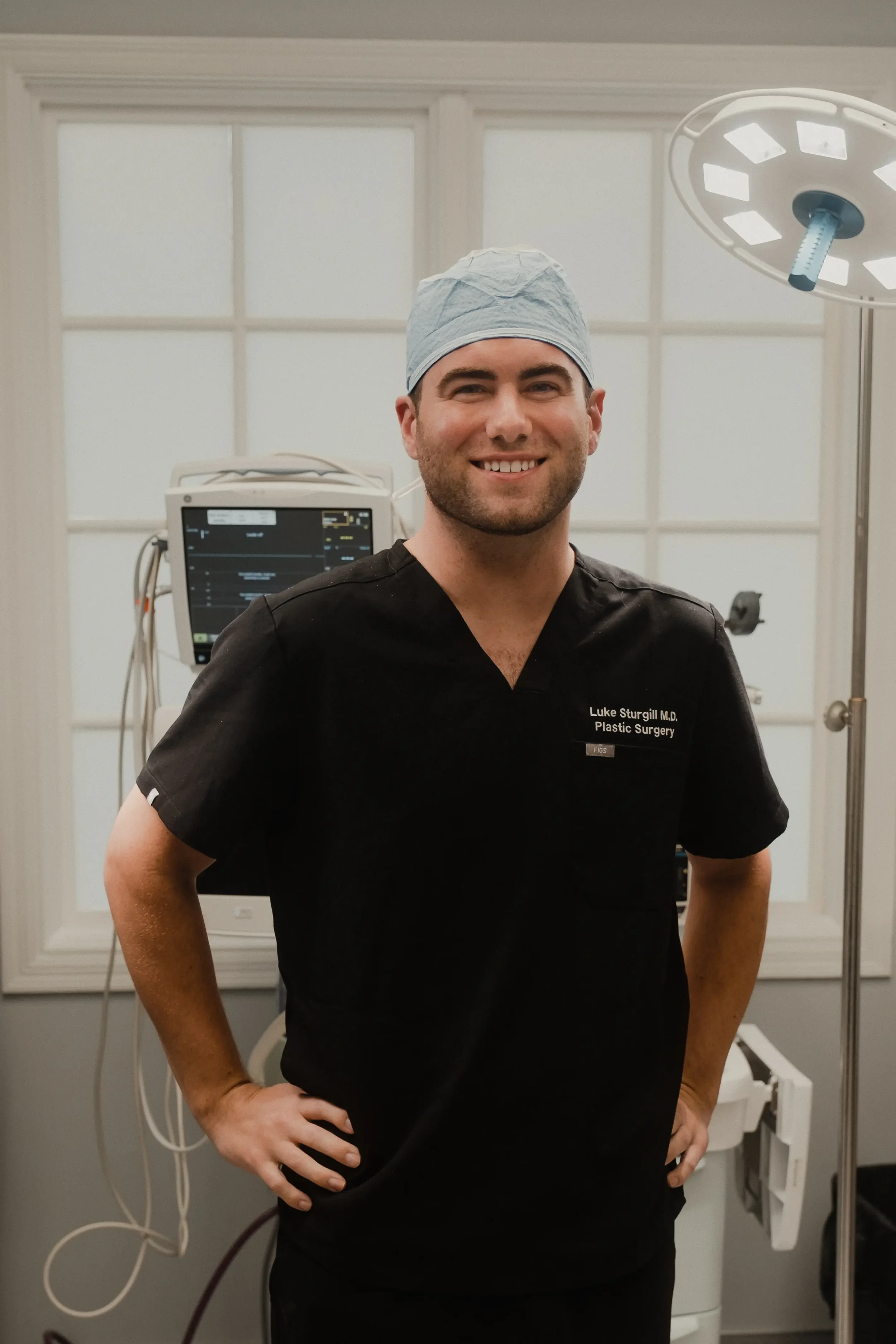
R. Luke Sturgill, MD ◆ Facial Plastic Surgeon
Understanding the Approach
What Is Scarless Preservation Rhinoplasty?
To understand why this technique represents the evolution of modern rhinoplasty, you need to distinguish between the approach (how we access the nose) and the technique (what we do inside). Dr. Sturgill combines the best of both.
The Approach
Scarless (Closed) Rhinoplasty
In the majority of rhinoplasties performed today — Open Rhinoplasty — the surgeon makes an incision across the columella (the strip of tissue between the nostrils) and peels the skin back to expose the skeleton.
Dr. Sturgill specializes in the Closed (Endonasal) approach:
- No External Scars: All incisions are hidden inside the nostrils. There is no external cut on the columella.
- Undisturbed Blood Supply: Because the skin is never lifted off the tip, the vascular network and lymphatic drainage remain intact.
- Faster Healing: Less soft tissue disruption means less swelling and a quicker return to social life.
The Philosophy
Preservation Rhinoplasty
Traditional rhinoplasty is reductive — it dismantles the nose’s natural support system to reshape it. Ligaments are severed, cartilage connections are separated, and the skeleton is reconstructed piece by piece. While skilled surgeons can achieve good results, this wholesale disruption can lead to problems years later.
Preservation Rhinoplasty works with the nose’s architecture, not against it:
- Intact Framework: The dorsal structure is repositioned rather than removed and rebuilt.
- Preserved Support: Ligaments and cartilage connections stay intact, reducing the risk of late collapse or pinching.
- Long-Term Stability: A nose that was never taken apart does not have to heal back together.
That distinction matters. A rhinoplasty can be closed without being preservation-based. It can also be preservation-based without being closed. When anatomy permits, Dr. Sturgill’s preference is to combine both: a scarless closed approach with preservation-focused technique.
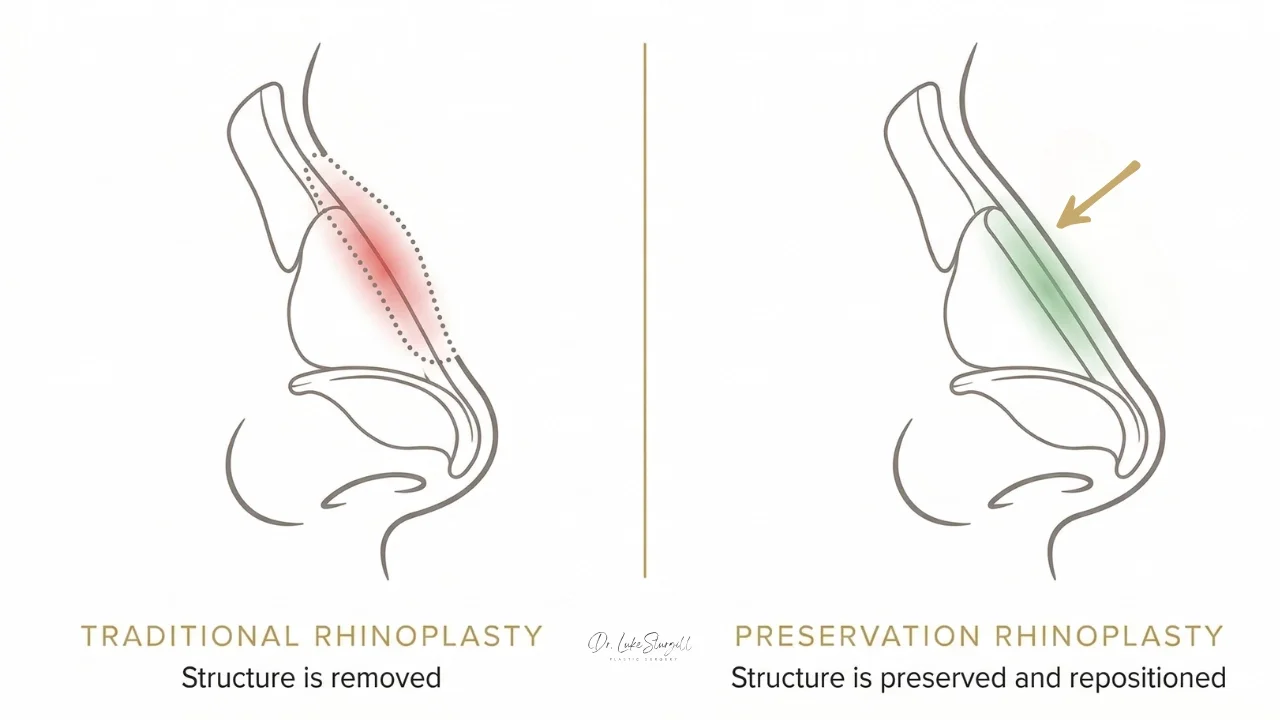
Traditional rhinoplasty removes the bridge. Preservation rhinoplasty repositions it.
How the Two Approaches Compare
| Traditional Open Rhinoplasty | Scarless Closed Preservation Rhinoplasty | |
|---|---|---|
| Incision | External cut across the columella plus internal incisions | All incisions hidden inside the nostrils |
| Visible scarring | Small scar on the underside of the nose | No external scar |
| Skin handling | Skin is lifted off the framework, disrupting blood supply and lymphatics | Skin envelope is left largely undisturbed |
| Dorsal management | Hump is removed from the top of the bridge and rebuilt | Bridge is repositioned from underneath, preserving the natural dorsal surface |
| Structural approach | Framework is taken apart and reconstructed with grafts and sutures | Native architecture is preserved and reshaped in place |
| Swelling | More significant, especially at the tip; can persist 12+ months | Typically less swelling due to reduced soft tissue disruption |
| Recovery timeline | Social presentability often 2 to 4 weeks; final result 12 to 18 months | Most patients presentable within 10 to 14 days; final result matures faster |
| Long-term stability | Depends on how well reconstructed framework heals and holds | Intact support structures reduce risk of late collapse, pinching, or shifting |
| Breathing considerations | Reconstruction can improve or compromise airflow depending on execution | Preserved framework maintains natural airway support |
| Best suited for | Noses requiring major structural reconstruction or significant tip work | Patients seeking natural refinement with minimal visible evidence of surgery |
What This Means for You
Preservation rhinoplasty is technically more demanding for the surgeon. But the advantages for the patient are clear:
Zero Visible Scarring
You will never have to worry about a scar on the base of your nose.
Maintained Character
You look like a refined version of yourself, not like a different person.
Functional Priority
A beautiful nose that compromises breathing is a failure. By preserving the internal valves and support, airflow is protected — and often improved.
The “Unoperated” Look
The highest compliment a plastic surgeon can receive is that their work goes unnoticed. Preservation techniques avoid the tell-tale signs of surgery.
This is not about doing less. It is about doing what the anatomy actually needs.
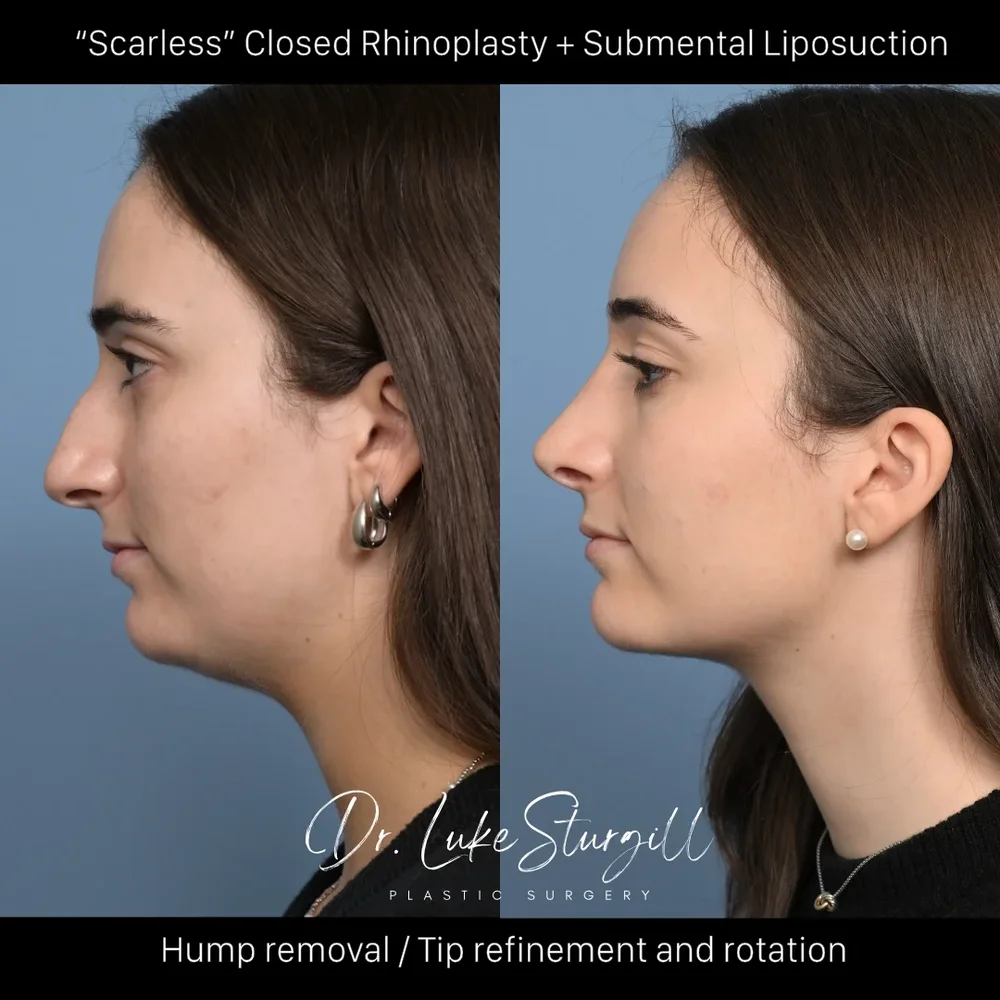
Not every nose is a preservation nose. The right operation depends on your anatomy, your goals, and what needs to be corrected. Dr. Sturgill will tell you which approach gives you the best result.
Concerns Addressed
What Rhinoplasty Can Improve
If you’ve spent years noticing your nose, you’re not alone
In photos, on video calls, in the mirror before you leave the house — it always draws your eye first. Most rhinoplasty patients aren’t looking for a different identity. They’re looking for a nose that stops competing with the rest of their face.
That’s what makes this such a personal procedure. The goal isn’t simply to make the nose smaller. The goal is to make it fit.
01
Dorsal Hump
A dorsal hump can make the nose feel heavier or more prominent than the rest of the face. Using preservation techniques when anatomy allows, the bridge can be lowered while maintaining smoother, more natural dorsal lines and stronger long-term support.
02
Drooping Tip
A drooping tip can make the nose appear longer, heavier, or older. Refining tip position can create a more balanced and more rested appearance.
03
Excess Projection
Some noses project too far forward from the face. When that is the primary concern, the nose can dominate facial balance even if the bridge itself is not especially large. Deprojection brings the nose into better proportion with the chin, lips, and forehead.
04
Wide, Boxy, or Undefined Tip
Tip refinement is not about creating a tiny, over-sculpted tip. It is about improving shape, proportion, and harmony while keeping the result believable.
05
Crookedness or Asymmetry
Some asymmetry is normal. The goal is improvement, not a false promise of perfection. Rhinoplasty can often make a crooked or deviated nose appear straighter and more balanced.
06
Functional Breathing Concerns
Aesthetic rhinoplasty and functional nasal surgery often overlap. Septal deviation, internal valve narrowing, turbinate enlargement, and other structural issues may contribute to obstruction and are evaluated carefully during consultation.
Candidacy
Who Is a Good Candidate
The best rhinoplasty candidates are not patients chasing perfection. They are patients with a clear concern, realistic goals, and anatomy that matches the plan.
Common Concerns
You may be a good candidate if you are bothered by
- A dorsal hump
- A drooping tip
- A nose that feels too large for your face
- Excess projection
- A tip that feels round, boxy, or poorly defined
- Asymmetry or crookedness
- Breathing obstruction
- Prior rhinoplasty results that look unnatural or feel structurally weak
Preservation Approach
You may be an especially good fit if
- You want a natural result
- You do not want an obvious “nose job” look
- You want to avoid a visible external scar
- You value long-term support and structural integrity
- Your anatomy allows for a closed, preservation-based plan
Skin Thickness Matters
Skin thickness is one of the most important variables in rhinoplasty planning.
Patients with thinner skin can show even small irregularities over time, which is one reason preservation techniques can be especially attractive in the right anatomy. Patients with thicker or more sebaceous skin often require different strategic decisions, because thicker skin can soften or hide tip definition and may need stronger underlying support.
This is one reason rhinoplasty cannot be standardized. Two patients with the same hump or the same tip concern may need very different operations.
Not Every Nose Is a Preservation Nose
Some noses are better treated with a more traditional structural or open approach, especially in cases involving:
- Severe asymmetry
- Major traumatic deformity
- Highly complex revision surgery
- Anatomy that requires more direct grafting or reconstruction
“Dr. Sturgill does not force every nose into the same operation. The surgical plan is individualized.”
Age Considerations
Girls
~14
After the last major growth spurt
Boys
~16
Typical minimum age for candidacy
If chin augmentation is being considered for profile balancing, permanent chin augmentation is typically deferred until at least 18 years of age. All guidelines depend on anatomy, maturity, goals, and timing.
Real Patient Results
Before & After
The goal of Dr. Sturgill’s rhinoplasty approach is never just to make a nose smaller. It’s to bring the nose into quiet harmony with the rest of the face — so the result looks like it was always meant to be there. What patients notice first isn’t any single change. It’s that everything looks balanced again — the profile, the tip, the proportions, all working together naturally. No two noses are treated the same way because no two faces are the same.
Our Photography Standards
100mm macro lens. Dual-light setup. Standardized positioning. No angles, no tricks. Learn why this matters and how to evaluate any surgeon’s before & after photos.
What to Look For
Here’s what separates a refined rhinoplasty result from an obvious one:
A note on photos: All images are unretouched and show real patients of Dr. Sturgill photographed under standardized clinical lighting with a 100mm macro lens. Results vary by individual anatomy, skin thickness, and healing response. These photos represent typical outcomes — not best-case-only marketing.
What to Expect
Recovery Timeline
Recovery is usually more manageable than patients expect. Most rhinoplasty patients describe more swelling and congestion than actual pain—and preservation techniques tend to reduce tissue disruption, which can mean less bruising and a shorter early recovery.
Procedure Time
2–4 Hours
Splint & Early Healing
A splint is typically worn for about one week. Congestion and stuffiness are common. Bruising around the eyes is possible, especially when nasal bones are addressed. Sleeping with the head elevated is helpful during the early healing period.
The First Look
When the splint comes off, patients usually look better than they expected—but not final. The bridge often looks good early. The tip is usually more swollen and less defined at this stage. Many patients feel socially presentable within 7 to 10 days.
Visible Improvement
Much of the visible swelling improves in the first several weeks. By around the three-month mark, the nose usually looks quite good in everyday life and in photos, but healing is still ongoing beneath the surface.
Final Refinement
Subtle swelling—especially in the tip—continues to improve over many months. The tip holds onto swelling longer because the skin is thicker there. In some patients, the most refined version of the nose is not fully visible until 12 months or longer.
After Your Procedure
- Light walking is encouraged early
- Glasses may need to be limited or modified temporarily
- Strenuous exercise is resumed gradually over several weeks
- Nose blowing should be avoided until Dr. Sturgill clears it
- Travel timing for out-of-town patients is discussed individually
Revision Patients
Revision rhinoplasty involves more scar tissue, greater complexity, and a less predictable healing course. These patients should expect a longer timeline and more gradual progress.
No Nasal Packing
Dr. Sturgill does not use nasal packing. Most patients deal primarily with congestion rather than the discomfort many people associate with packing removal.
Revision Surgery
When a Previous Rhinoplasty Falls Short
If you’ve already had rhinoplasty and the result isn’t what you expected—or if new problems have developed since your first surgery—you’re not starting over. You’re starting from a more complex place. Revision rhinoplasty requires a surgeon who understands altered anatomy, works well with scar tissue, and knows when a second surgery can genuinely help.
Revision rhinoplasty isn’t about doing more. It’s about understanding what was changed, what was lost, and what can still be achieved with the anatomy that remains.
Issues Dr. Sturgill Commonly Addresses
01
Pinched or Collapsed Tip
Over-resected cartilage that has narrowed, pinched, or lost support—sometimes worsening gradually over years as scar tissue contracts.
02
Over-Reduced Bridge
A scooped or ski-slope profile from aggressive hump removal, sometimes with visible irregularities or a “polly beak” that developed after surgery.
03
Breathing Problems
Functional obstruction that started or worsened after prior surgery—often caused by internal valve collapse or structural compromise that was never addressed.
04
Unnatural Appearance
A nose that looks “done”—too small, too turned up, asymmetric, or simply out of balance with the rest of the face in a way that draws attention.
The Reality
Why These Cases Are Different
In a primary rhinoplasty, the surgeon works with native anatomy—cartilage is intact, tissue planes are clean, and the skin behaves predictably. Revision changes all of that.
Scar tissue replaces the normal glide between layers. Cartilage may be weakened, missing, or distorted. The skin may not drape the same way it once did. The margin for error is smaller, and the healing course is less predictable.
This is why revision rhinoplasty often involves structural cartilage grafting—rebuilding the internal framework to restore support, improve breathing, and create a shape that will hold up long-term rather than collapse again.
Honest Assessment First
Not every nose can be improved significantly with a second surgery. Dr. Sturgill evaluates each patient candidly—what’s realistic, what’s possible, and whether the potential improvement justifies the risk.
Structural Rebuilding
When prior surgery has removed too much cartilage, the solution is rarely more removal. It’s reconstruction—using rib cartilage, septal cartilage, or ear cartilage to rebuild a stable foundation.
Form and Function Together
Many revision patients have both cosmetic and functional concerns. These are addressed together in a single operation rather than treated as separate problems.
Revision rhinoplasty is typically not considered until at least 12 months after a prior procedure, allowing swelling to fully resolve and tissues to mature before planning a second surgery.
Complete Facial Balance
Complementary Procedures
Rhinoplasty is sometimes the main event. Sometimes it is one part of a broader facial balance strategy. For the right patient, combining procedures can create a more complete and more harmonious result.
Profile Balance
Chin Augmentation
A small or retrusive chin can make even a well-proportioned nose look too prominent. When profile imbalance comes from both structures, addressing the chin alongside rhinoplasty can produce a result that neither procedure achieves alone.
Learn MoreLower Face
Neck & Jawline Contouring
A well-refined nose can highlight a soft neckline or undefined jawline. For patients whose profile concerns extend below the chin, submental liposuction or neck contouring can sharpen the lower face and complete the overall balance.
Learn MorePerioral Harmony
Lip Lift
The space between the base of the nose and the upper lip directly affects how the nose looks from the front and in profile. When a long upper lip creates imbalance, a lip lift can improve nasal-lip harmony and restore natural proportion.
Learn MoreThe right combination is determined by anatomy, not by a package.
Credentials & Approach
Why Patients Choose Dr. Sturgill
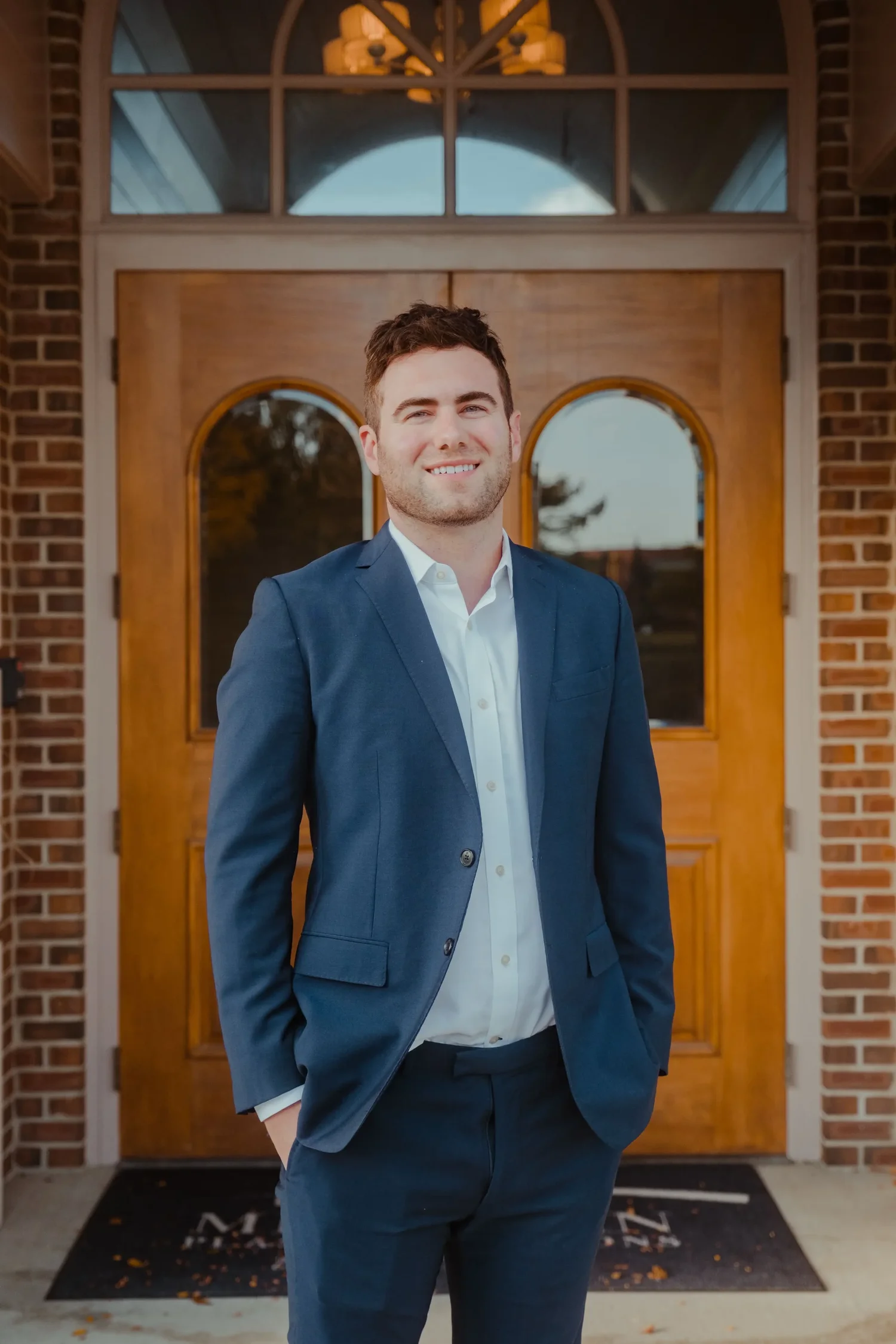
01
This Is All He Does
Dr. Sturgill doesn’t operate on breasts in the morning and noses in the afternoon. He is a double board-certified facial plastic surgeon who operates exclusively on the face and neck—and rhinoplasty is the most technically demanding procedure he performs. That level of focus matters when fractions of a millimeter determine the difference between a good result and one you’ll notice every time you look in the mirror.
02
Preserve What Already Works
Dr. Sturgill is one of the few surgeons in the Midwest trained in closed preservation rhinoplasty—an advanced technique that reshapes and repositions the native cartilage framework rather than cutting it down and rebuilding from scratch. When cartilage is strong and well-positioned, there’s no reason to remove it. Preserving that architecture means less structural disruption, more predictable healing, and a result that holds its shape naturally over time instead of deteriorating as scar tissue matures.
03
The Best Rhinoplasties Don’t Look Like Rhinoplasties
If someone looks at your nose and thinks “great surgery,” something went wrong. The goal is a nose that fits your face so naturally that no one questions whether it was always there. Dr. Sturgill would rather do less and get that right than do more and overshoot it—and he’ll tell you during your consultation if what you’re hoping for isn’t realistic for your anatomy.
What Patients Are Saying About Dr. Sturgill
Real reviews from real patients—because the best referral is an honest one.
Ready to Take the Next Step?
Your consultation is a planning session — not a sales pitch.
Dr. Sturgill will examine your nasal anatomy, discuss your concerns about both appearance and breathing, and give you an honest assessment of what rhinoplasty can — and cannot — achieve for your specific nose. You’ll leave with a clear understanding of whether surgery is the right path forward.
What to Expect
- Discuss your goals and what bothers you about your nose
- Receive a detailed nasal analysis and personalized surgical plan
- See what your nose could look like after surgery with live computer imaging
- Get honest answers—no pressure, no upselling
Consultations typically last around 45 minutes.
Book Your Consultation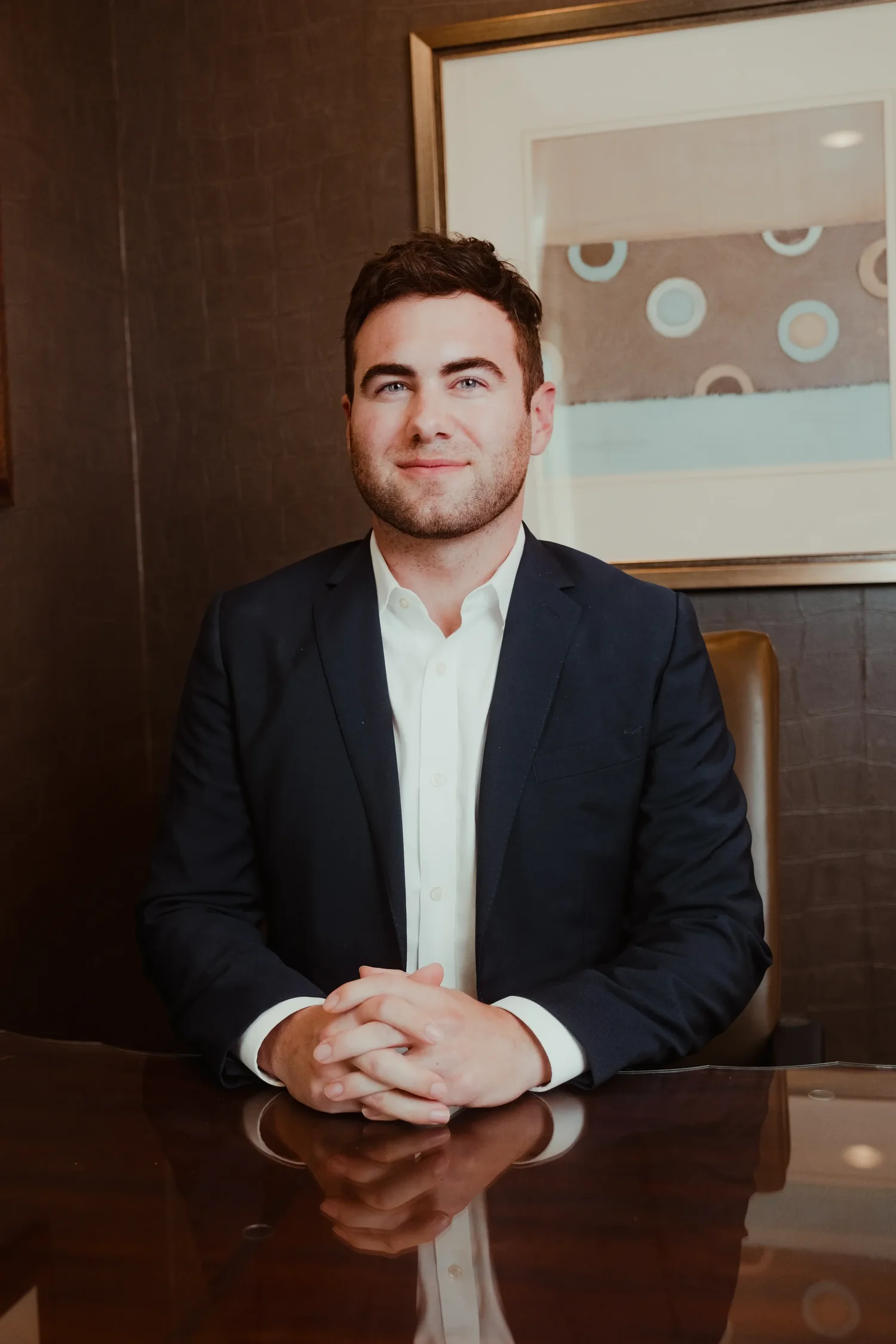
Common Questions
Rhinoplasty FAQ
Honest answers to the most common questions patients ask about rhinoplasty, recovery, results, and what to expect.
Approach & Terminology
What is preservation rhinoplasty?
Preservation rhinoplasty is a modern surgical approach that reshapes the nose by repositioning its native framework rather than removing and rebuilding it. Instead of cutting away the dorsal hump from above, for example, preservation techniques work from underneath—allowing the bridge to settle to a lower position while keeping its smooth outer surface and natural support more intact. The result is often a smoother dorsal line, more predictable long-term stability, and a lower risk of the “operated” look that can follow more aggressive resection.
What is closed rhinoplasty?
Closed rhinoplasty means the incisions are hidden inside the nostrils, with no visible external scar on the outside of the nose.
What do people mean by “scarless rhinoplasty”?
Some patients use the term “scarless rhinoplasty” to describe closed rhinoplasty because there is no visible external scar. Technically, the incisions are simply hidden inside the nostrils.
Is a “nose job” the same as rhinoplasty?
Yes. “Nose job” is the colloquial term. Rhinoplasty is the medical term.
Is closed rhinoplasty better than open rhinoplasty?
Not automatically. Closed rhinoplasty avoids an external incision and preserves more of the ligaments, soft-tissue attachments, and blood supply that support the nasal framework. That means less soft-tissue disruption overall, which typically translates to less swelling and a faster healing timeline. Open rhinoplasty, however, provides wider exposure that can be necessary for complex revision cases or severe structural deformity. The best approach depends on the anatomy and what needs to be accomplished. Dr. Sturgill prefers a closed approach whenever it can achieve the goal well, but is direct when a different approach is more appropriate.
Results & Expectations
Will I still look like myself?
That is the goal. Dr. Sturgill’s philosophy is built around refinement, balance, and preservation of identity—not dramatic transformation. The aim is a nose that looks natural, fits your face, and does not announce itself as having been surgically altered. Preservation-focused techniques help achieve this by maintaining more of the nose’s native structure. You can see examples of this approach in our before & after gallery.
Can rhinoplasty improve breathing?
Yes. Many cosmetic rhinoplasty patients also have structural issues—such as a deviated septum, enlarged turbinates, or narrow internal nasal valves—that contribute to breathing difficulty. Because the same framework that shapes the nose also controls airflow, these functional concerns are often best evaluated and addressed at the same time as cosmetic changes. When appropriate, septoplasty, turbinate reduction, or valve repair are incorporated into the surgical plan. Schedule a consultation to discuss both cosmetic and functional concerns together.
How long do rhinoplasty results last?
Rhinoplasty results are long-lasting and, in most cases, permanent. The changes made to bone and cartilage during surgery are structural, so the overall shape of the nose is stable once healing is complete. That said, the nose continues to age along with the rest of the face, and subtle changes over decades are normal. Long-term quality depends heavily on technique, support preservation, skin characteristics, and how well the native framework is maintained during surgery. Browse our before & after gallery to see the type of results Dr. Sturgill achieves.
Recovery
How painful is rhinoplasty recovery?
Most patients describe rhinoplasty recovery as more congested and uncomfortable than truly painful. The first several days involve stuffiness, mild pressure, and some swelling, but significant pain is uncommon. Dr. Sturgill does not use nasal packing, which eliminates one of the most commonly dreaded parts of the recovery process. For a detailed overview of what to expect, visit our post-operative care page.
How long until I look normal?
Many patients feel socially presentable within 7 to 10 days, but swelling continues to improve for many months. You can find a week-by-week breakdown on our recovery & aftercare page.
Can I smile normally after rhinoplasty?
Yes. Early stiffness and swelling are normal, but facial movement improves as healing progresses. One advantage of preservation-minded surgery is that it respects native anatomy whenever possible.
Can I wear glasses after rhinoplasty?
Sometimes, but this depends on the surgical plan and healing stage. Dr. Sturgill gives specific guidance based on whether pressure on the bridge needs to be avoided.
When can I return to work after rhinoplasty?
Many patients return to desk work or light daily activity within about a week, depending on swelling, bruising, and how public-facing their job is. See our post-operative care page for detailed activity guidelines.
Do you use nasal packing?
No. Dr. Sturgill does not use nasal packing.
Planning & Cost
What does rhinoplasty cost?
Rhinoplasty pricing varies based on complexity, whether the case is primary or revision, and whether other procedures are being performed at the same time. Because no two noses are alike, Dr. Sturgill’s team provides individualized pricing after consultation and treatment planning. Financing options are available and can be discussed when appropriate.
Do you offer virtual consultations?
Yes. Virtual consultations are available for appropriate patients, including many out-of-town patients.
Do you treat patients from outside Indianapolis?
Yes. Many rhinoplasty patients are willing to travel for the right surgeon. We have a dedicated out-of-town patient guide with details on travel planning, lodging, and coordinating care from a distance. All procedures are performed at our accredited surgery center in Carmel.
Candidacy & Combinations
How long should I wait before revision rhinoplasty?
In most cases, revision rhinoplasty is not considered until at least 12 months after the original surgery, allowing swelling to resolve and tissues to fully mature. If you’re unhappy with a previous rhinoplasty, request a consultation to discuss your options and timing.
How old do you have to be for rhinoplasty?
In general, Dr. Sturgill considers rhinoplasty for girls beginning around age 14, assuming they have already gone through their last major growth spurt. For boys, the usual minimum age is 16. Final candidacy still depends on anatomy, maturity, and timing—schedule a consultation to discuss.
What if I am considering rhinoplasty with chin augmentation?
If profile balancing includes permanent chin augmentation, that portion is typically not considered until at least 18 years of age in both males and females. Dr. Sturgill frequently combines rhinoplasty with facial implants for comprehensive profile balancing.
Can rhinoplasty be combined with other procedures?
Yes, in the right patient. Common complementary procedures include chin augmentation and other profile-balancing procedures. View the full list of procedures Dr. Sturgill offers to see what may be combined in a single surgical session.
Am I a candidate for closed preservation rhinoplasty?
Many patients are. Some are not. The answer depends on your anatomy, your goals, and what needs to be corrected. The best way to find out is during a consultation with Dr. Sturgill.
Next Step
Considering Rhinoplasty?
If you are looking for a rhinoplasty that prioritizes natural results, long-term support, and preservation of what makes your face yours, request a consultation with Dr. Sturgill. This is a thoughtful, individualized approach—built around anatomy, restraint, and results that look like they belong on your face.